

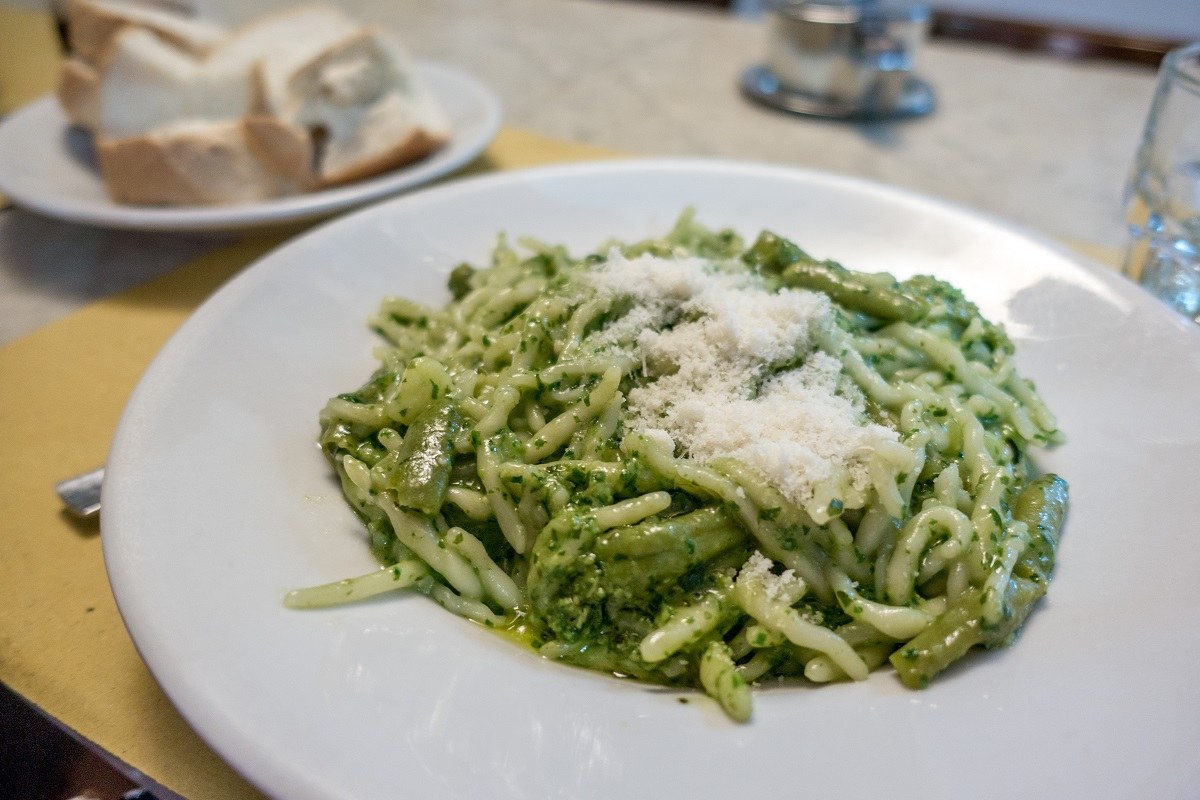

If Genoa has a culinary gift to the world, it’s pesto, and not just any pesto, but pesto alla genovese, the original, the one that everything else is merely an imitation of.
The sauce is deceptively simple: fresh Ligurian basil (specifically Ocimum basilicum grown in the microclimate of Pra’, a western district of Genoa), Parmigiano Reggiano, Pecorino Sardo, Ligurian extra virgin olive oil, pine nuts, garlic, and coarse sea salt. Traditionally, it’s made in a marble mortar with a wooden pestle, pestare means “to pound” in Italian, which is where the name comes from. The grinding rather than chopping preserves the basil’s delicate oils and prevents oxidation, keeping that vivid, almost electric green color intact.
In Genoa, pesto is most classically served with trofie (short, twisted pasta) or trenette, often alongside green beans and cubed potatoes boiled right in the same pot, a combination that might surprise visitors but makes perfect, hearty sense once you taste it.
What sets authentic Genovese pesto apart from the jarred versions most of the world knows is the basil itself. The young leaves grown in Liguria have a sweetness and a lack of mintiness that basil grown elsewhere simply doesn’t replicate. Locals will tell you, without a trace of exaggeration, that pesto made anywhere outside the region is a different sauce entirely.
In 2023, the traditional method of making pesto with a mortar and pestle was added to Italy’s national list of intangible cultural heritage, a recognition long overdue for one of the most beloved sauces in the world.