

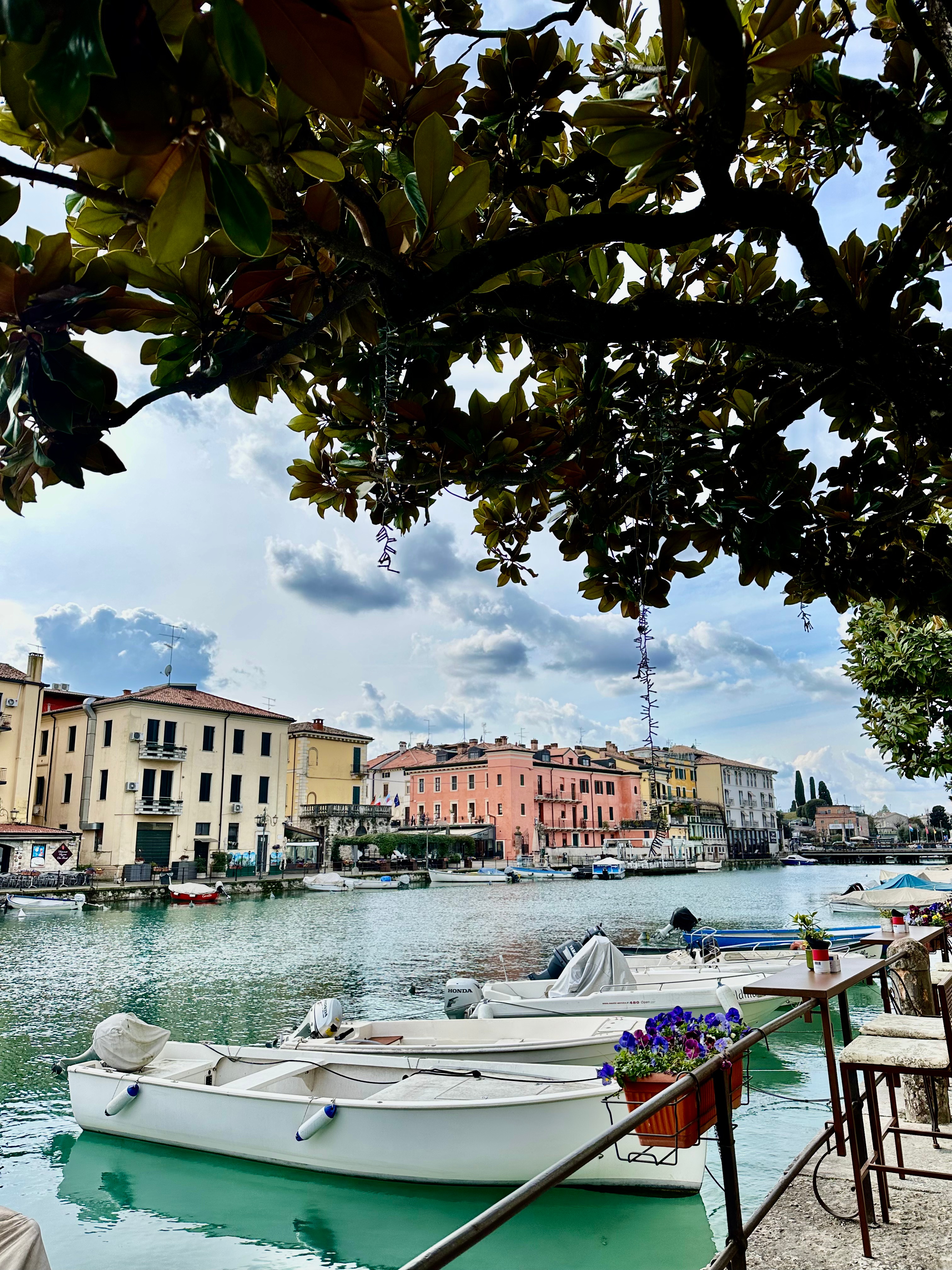

Lake Garda’s history stretches back over 2,000 years, beginning with ancient settlements from the Bronze Age that took advantage of the lake’s fertile shores and strategic location. It later became an important stronghold for the Romans, who constructed villas, thermal baths, and military stations throughout the region. One of the most impressive remnants of this era is the Grotte di Catullo in Sirmione, a vast Roman villa complex dramatically perched above the lake’s turquoise waters. Walking through its ruins brings the ancient world to life, offering insight into the political rivalries and shifting alliances that once shaped the region.
During the Middle Ages, Lake Garda evolved into a crossroads of power contested by the Scaligeri family of Verona, the Visconti of Milan, and the Republic of Venice. Their influence remains visible today in the fortified castles overlooking the lake, like the remarkable Scaliger Castle in Sirmione and the striking fortress of Malcesine, which rises directly from the water and dominates the surrounding landscape.
By the 19th century, Lake Garda had transformed into a favored retreat for poets, writers, and statesmen. Literary figures like Goethe, Kafka, and D.H. Lawrence found inspiration in its scenery, while the lake also played a strategic role during the Italian unification and both World Wars. Sites like the Vittoriale degli Italiani, poet Gabriele D’Annunzio’s eclectic estate, reflect this layered and often complex history.
But beyond political milestones, Lake Garda’s story is deeply rooted in everyday life shaped by the lake itself. Fishing villages flourished along its shores for centuries, supported by a mild climate that allowed olive groves, citrus trees, and vineyards to thrive far north of their usual range. This environment sustained local communities and attracted merchants and travelers moving between Europe and the Mediterranean. Over time, Garda became a cultural bridge where Alpine traditions blended with Italian customs, cuisine, and architecture—a living heritage we are lucky to experience today.