
There is no doubt on the fact that Italians have a wild imagination and we can see how this applies to almost anything, starting with food.
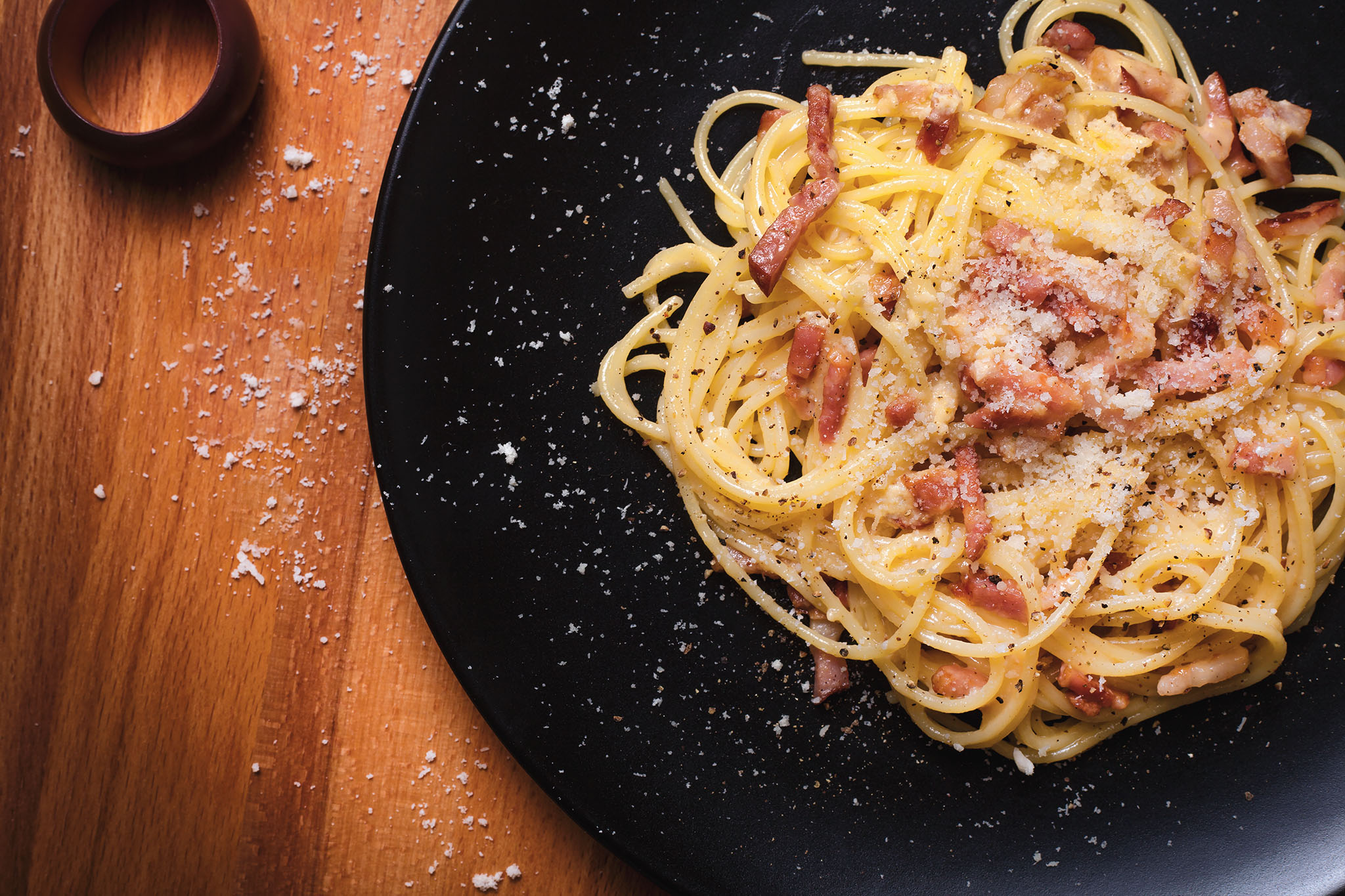
Let’s start with one of the most famous dishes in Roma: Carbonara. “Carbone” means coal – the reason why this pasta with eggs and pan-fried pork cheek is called like this is still unknow: perhaps because people from the Roma area working on the nearby mountains to produce coal from burned wood used to eat a pasta dish with egg and pork fat, or maybe because the first place this recipe was prepared was at Carbonia (Sardinia); it is still a mystery.
Mystery and imagination are ingredients that along with tomato, garlic and olive oil, you will find pretty much in most Italian dishes. For instance, Pecorino Romano cheese is produced mainly in Sardinia.
A lot of dishes also got their name from their hometown: Amatriciana from Amatrice, a little village near Rieti, Gricia from Grisciano, also in the same area; and by the way, Gricia is just as popular as Cacio e Pepe and Carbonara in Rome.
Then you have other amusing names, such as “puttanesca”: apparently a restaurant in Roma used to serve this dish to people visiting a brothel (puttana = prostituta), yet some documents indicate this dish as born in Ischia.
“Strozzapreti” means priest strangler – Why? Apparently in Romagna priests use to steal eggs from country houses and, when housewives had to make pasta with only flour and water, they would wish the priests would choke on the eggs.
“Schiaffoni” (slaps in dialect): large pasta from Napoli area, usually served with tomato sauce; the noise the pasta would make when served onto the plate was reminiscent of a slap.
“Ziti”: tipically served at weddings; Zita, in southern Italy indicates fiancée.
“Cecamariti” (husband blinder): dry soup with vegetables, legumes and stale bread – apparently this combination was so good that husbands could see only the plate on the table and forgot everything else. Hard to find on today’s gourmet menus, but if you are in Salento, the lower part of the heel, give it a try.
“Reginette” or “Mafaldine”: large tagliatelle with a rippled side, got their name from the dress that Queen Margherita or Mafalda di Savoia used to wear.
“Bigoli” (no, not beagle the dog): pasta from the Venetian area, got its name from the shape which in dialect means small worm.
“Pici”: the Tuscany version of spaghetti. Got their name from …don’t really know yet, they are still discussing it.
“Busiata”: from the Arabic word bus, the typical stick this pasta was wrapped onto to give it its shape.
“Assassina” (murderous): spaghetti cooked directly in the tomato sauce without boiling the pasta in water, very spicy, hence the name (the first couple who ate it called the chef murderous).
“Pane Cafone” (peasant bread): to identify the kind of bread preferred by peasants, a classic round shape, Matera and Altamura style.
“Minne di Sant Agata” (breasts of Sant’Agata) or “Tette di Monaca” (nun’s breasts): these pastries are named after their shape and decoration.
“Bastardo del Grappa” is a typical cheese from the Venetian area called Bastardo due to being made by mixing different kinds of milk.
“Zizzona di Battipaglia” – Identifies a very large (over 2 lbs) buffalo mozzarella from south of Salerno – Zizzona means large breast; the area of Battipaglia likes to differentiate itself from the other production areas north of Naples and south of Roma.
“Malloreddus”: a strange name for typical Sardinian gnocchi, possibly from the latin word “mallolus” (small hammer), or the Sardinian word “Malloru” (small veal), or… who knows?
“Culurgiones”: stuffed pasta, similar to ravioli, but with an elaborate closing similar to stitches; the name probably stems from the Latin word “culleus” (pouch).
And the last one for today – “Spritz” – Why this name? In German Spritzen means spray. Everyone enjoys this now with all sorts of spirits and sparkling wine but the original version was wine with a splash of water. The splash of water was added by the Venetians as the Austrian soldiers who were in the area in the 19th century couldn’t handle wine as it was too strong. Another story claims that in the Arsenale Shipyard in Venice in the 16th century to reward workmen for a good job their break was bread and a glass of watered-down wine… believe it or not, nowadays some work-contracts in Europe still state on the agreement that ¼L of wine should be provided with every meal.