


Rising like a tower of pale stone against the northern Italian sky, the Dolomites trace their origins to a lush marine reef some 250 million years ago, when coral, shell fragments, and volcanic ash compressed beneath a primordial sea and, after ages of shifting plates, were thrust skyward to form the dramatic pinnacles we admire today: a legacy first recognized by French geologist Déodat de Dolomieu. The range still bears his name—or more accurately, the distinctive carbonate mineral that forms its peaks: dolomite. This mountain complex covers over 140,000 hectares, distributed over three Italian regions: Trentino-Alto Adige, Veneto, and Friuli Venezia Giulia, with a small portion extending into Austria as the Lienz Dolomites.
Long before guidebooks and cable cars, Mesolithic hunters roamed these valleys, leaving behind flint tools, while medieval shepherds carved wooden malghe to raise and maintain their livestock. Local legends speak of fog-cloaked peaks to this day, where elusive figures—like fairies and dwarves—are said to inhabit the crags, carving the rock and vanishing with the dusk.
As World War I unfolded, these high peaks became a deadly frontline between the Italian and Austro-Hungarian forces, their rocky faces transformed by soldiers into makeshift routes and shelters. The via ferrata (“iron paths”) now serve as both adventurous mountain routes and enduring memorials to the battles once fought here.
By the late 19th century, pioneering climbers such as Paul Grohmann and Fritz von Brombach achieved notable first ascents on various peaks, including Antelao and Marmolada. Their feats catalyzed a flourishing era of alpinism, ultimately laying the foundation for today’s extensive network of rifugi (mountain huts) and marked trails. The arrival of railways and cable cars in the early 20th century opened the Dolomites to a new breed of tourist eager for guided climbs, botanical walks amid rare gentians and edelweiss, and restorative spa retreats in valley villages.
In 2009, UNESCO recognized the Dolomites as a World Heritage Site for their geological wonders and breathtaking beauty, ensuring the protection of five distinct areas—among them the jagged spires of Tre Cime di Lavaredo and the sprawling Fanes-Senes-Braies Park, where ibex, chamois, and marmots still roam freely.
Often called the “pale mountains” because of the light color of their dolomite rock, the Dolomites offer their best natural spectacle at sunrise and sunset: when the sun hits the peaks, the rock glows in shifting tones—from soft yellow to deep red, with hints of pink and purple. Locals call this striking effect enrosadìra, a Ladin word that literally means “turning pink,” referring to the moment the mountains light up in warm, rosy shades as the day begins or ends.
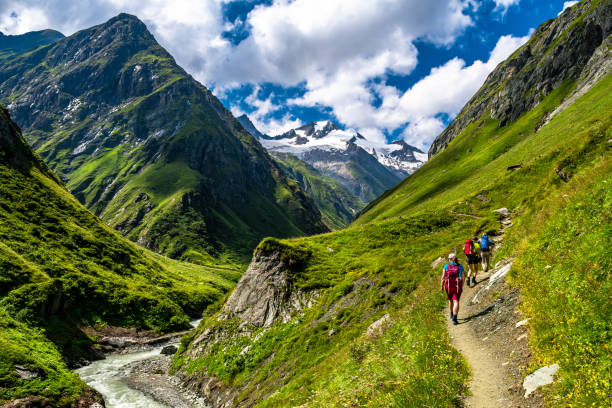
Today, the Dolomites remain a living classroom and playground. In summer, hikers wander century-old trails between rifugi, pausing for polenta and mountain cheese on the sunlit terraces; in winter, the slopes beneath the steely peaks become a playground for winter sports enthusiasts. Glaciologists and geologists return season after season to study the same coral-reef fossils that first caught de Dolomieu’s eye, while local shepherds and cheesemakers uphold traditions that date back centuries.
Sustainable tourism initiatives now fund trail maintenance and support the small farms and malghe that define high alpine life. The Dolomites offer a blend of natural wonder and human story: whether one is pausing at dawn beneath the Seiser Alm or clipping into an iron ladder high on a via ferrata, visiting here is an invitation. In every step, one can be part of a legacy that stretches 250 million years into the past and far into the future.